Rukuriri, tucked within Runyenjes Constituency of Embu County, Mugambi stood under the early morning sun, watching mist rise gently from his small tea farm. For years, he had followed the same routine—pruning bushes, plucking tea leaves, weighing them at the buying center. His hands bore the marks of decades of labor, and yet his earnings seemed to shrink each year. The price of tea fluctuated, farm inputs were rising, and the yields no longer met his needs.
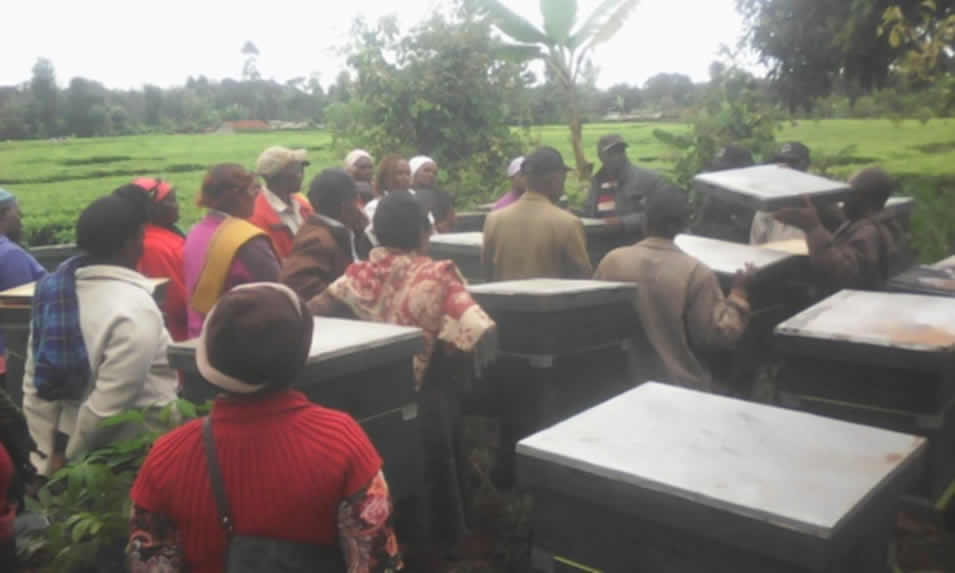
One evening at Annual General Meeting held at the Buying centre grounds, Below is attached photos of beehives, Mugambi heard a guest speaker from the Embu County Department of Agriculture who was invited by Agricultural Officer discussing apiculture—the art of keeping bees. “Bees don’t just make honey,” the speaker explained. “They support our farms. They pollinate, they boost crop yields, and they offer a second income to farmers, even those like you—tea growers.”
Mugambi heard a guest speaker from the Embu County Department of Agriculture who was invited by Agricultural Officer discussing apiculture—the art of keeping bees. “Bees don’t just make honey,” the speaker explained. “They support our farms. They pollinate, they boost crop yields, and they offer a second income to farmers, even those like you—tea growers.”
The idea buzzed in Mugambi’s mind for days. He’d never paid much attention to bees beyond swatting them away during tea plucking. But as he walked his land, he noticed how few pollinators were around. With encouragement from a local youth group already practicing beekeeping, Mugambi decided to take a bold step.
He began by consulting an agricultural extension officer, who visited his farm and assessed its suitability. “You’re lucky,” she said. “Rukuriri’s highland climate, abundance of flowering trees, and the proximity to Mt. Kenya Forest make it ideal for beekeeping.” She recommended Apis mellifera scutellata—the East African honeybee—known for its hardiness, high productivity, and suitability for the region.
Mugambi constructed five Langstroth hives and installed them at the edge of his tea plot, near flowering trees like croton and calliandra. With training from the cooperative and a borrowed bee suit, he learned hive management—how to conduct inspections every two weeks, when to harvest honey, and how to detect swarming.
But it wasn’t all smooth. At first, some hives failed to attract colonies. Neighboring farms used pesticides that killed off foraging bees. One night, honey badgers knocked over two hives. Mugambi felt discouraged, but he persisted. He reinforced the stands, planted more bee-friendly flowers, and held a meeting with neighbors to advocate for safer, organic pest control.
Over time, the results began to show. Not only did he harvest his first 15 kilograms of golden, fragrant honey, but he noticed subtle changes on the farm. His nearby avocado trees had more fruit. Indigenous vegetables grew more vigorously. Even his tea leaves looked healthier—glossier and more robust. The environment, once silent, now buzzed with life.
He sold his honey at the market in Runyenjes Town under the brand “Rukuriri Gold” and received encouraging feedback. Its unique floral notes—thanks to the diversity of nectar sources—fetched a premium price. With the extra income, he paid school fees for his daughter and invested in more hives.
Mugambi’s farm soon became a local learning center. Farmers from Mukuuri, and beyond visited to learn how beekeeping could blend seamlessly with tea farming. The Rukuriri Bee & Tea Initiative was born—a grassroots network that trained farmers, promoted pollinator-friendly practices, and created a shared processing center for honey packaging.
Through his journey, Mugambi not only transformed his farm but also his perspective. “I used to fight nature with chemicals and sweat,” he told visitors. “Now, I work with it. The bees are my partners, my workers, and my guardians of the land.”
From a struggling tea farmer to a model agri-entrepreneur, Mugambi’s story became a buzz of hope for smallholders across Embu County—a reminder that even the smallest creatures can bring the sweetest change.

Comments are closed